CET310 Software Enterprise Task and Submission

- Details
- Category: Level 3, Software Enterprise
- Published: Wednesday, 03 February 2021 18:19
- Hits: 854
Task
University of Sunderland
Faculty of Computer Science
|
MODULE CODE: |
CET310 |
|
MODULE TITLE: |
Software Enterprise |
|
MODULE ASSESSOR: |
Dr. Kate MacFarlane |
|
ASSESSMENT: |
1 of 1 |
|
TITLE OF ASSESSMENT: |
Portfolio: New Micro-business Creation |
|
MODERATED: |
January 2020 |
PLEASE READ ALL INSTRUCTIONS AND INFORMATION CAREFULLY.
This assignment contributes 100% to your final module mark.We are required to send samples of student work toexternal examiners for moderation purposes; please ensure that you retain a duplicate of your assignment. It will also safeguard your work in the unlikely event of your work going astray.
THE FOLLOWING LEARNING OUTCOMES WILL BE ASSESSED:
Knowledge
- Critical understanding of the key concepts and systematic processes involved in software enterprise, including business creation, development, sustainability and growth;
- Understanding of the software and business context locally and internationally, able to critically evaluate and access opportunities, support and services for enterprise;
Skills
- Demonstrate ability in the creation, development, growth and sustainability of businesses including marketing, responding to trends and opportunities, finance and budget setting (e.g. cash flow, selling, pricing), planning, strategy development, purchasing, product development, managing social media, business administration, and compliance with relevant legal and financial frameworks;
- Key personal and professional skills to extend personal influence and specific capabilities including information synthesis, risk-taking, decision-making, uncertainty, problem-solving, communication, human resource issues and leadership.
IMPORTANT INFORMATION
You are required to submit your work within the bounds of the University Infringement of Assessment Regulations (see your Programme Guide). Plagiarism, paraphrasing and downloading large amounts of information from external sources, will not be tolerated and will be dealt with severely. The coursework submission for this module is partly based upon your research activity of business services e.g. on the Internet and partly on books and articles like journal or conference papers exploring key topics. Wherever you use material from other sources, this should be duly referenced. It is important to note that your workWILLBE SUBJECT TO CHECKS FOR ORIGINALITY, which WILLinclude the use of an electronic plagiarism detection service.
NEW BUSINESS CREATION
The practical element of this module involves you working in a team context in new micro-business creation activities. This team working activity will make the new business creation both feasible in the limited time available, a mutually supportive context in which you can work together to solve problems and more enjoyable as a reflective learning experience.However the portfolio submission is an individual piece of work, and must be entirely your own.
When working in the team business creation activity you will generate many different types of documentation/resources as a group. Each student must individually keep their own practical e-Portfolio of Resources in Canvas and must accrue this documentation during the course of the practical business development activities undertaken on the module, providing the body of work against which interim and final reflective activities can be based.
Note the safety of your assessments is your responsibility. You must not permit another student access to your work at any time during the inception, design or development of your written portfolio submission and you must take great care in this respect.
Where referencing is required, unless otherwise stated, the Harvard referencing system must be used (see your Programme Guide or university library website).
|
Submission Date and Time |
See Canvas |
|
Submission Location |
Electronic submission via CANVAS |
PORTFOLIO: New Business Creation
Introduction
Over the 12 weeks of the module you will be involved in new business creation. The module will deploy an ‘Agile’ business approach which reflects the way enterprises need to react swiftly to changes in their internal and external environments. Consequently, the time available will be divided into three ‘Sprints’, each of four weeks duration. The three sprints will focus upon:
- Product: identifying the product or service that your new business aims to deliver
- People: determining how the individuals in your team will work together to deliver this product or service
- Process: identifying the key processes involved in the delivery of this new business.
Full details of the Agile approach to be adopted and the practical activities you will be engaged in will be introduced at the start of the module.
Portfolio Development
In parallel with the practical business creation tasks in each Sprint, you will work on the development of a written portfolio of work which documents research activities that you have undertaken around the three key themes of Product, People and Process and which document your experiences and reflection of the micro-business creation as it proceeds. At the end of Sprints 1 and 2, you will submit a draft literature review and draft reflection and will receive marks for the timely submission of these drafts to ensure that the work in undertaken in a staged and incremental manner. youThe final version of the literature review and reflection, taking account of any feedback from sprints 1 and 2, will be submitted at the end of sprint 3
Portfolio Structure
The portfolio must have the following structure:
Introduction (500 words)
The introduction should include a short mission statement for your micro-business and should provide a short overview of the contents of your e-Portfolio on Canvas.
Section 1: Product (1,000 words)
Section 1.1 Literature Review on Product and Product Development (500 words)
This section should be a 500 word literature review of the role of product and product development in small business. Suggested themes are – the notion of product, how business is organised around product and how product can determine the nature of the business activity. As product by implication includes both product and services, and is a broad topic, you may focus upon a theme introduced in lectures or may read around the subject to identify your own theme(s), although you can use one of the suggested themes if you prefer. You only have 500 words for this section, so you should focus on ONE theme only.
Section 1.2 Reflection on Experiences of Business Creation in the Product Sprint (500 words)
This section should be a 500 word reflection on your experience of the business activity at the end of the Product Sprint, drawing both from what you learned from the research activity as embodied in the literature review that you developed and from what you did in the sprint and your learning in this practical business creation activity. This is about your experience of the business during this early stage of identifying your product and about your interaction with the group.
Section 2: People (1,000 words)
Section 2.1 Literature Review on People in Business Organisations (500 words)
This section should be a 500 word literature review about people in business organisations and the ways in which they work together to create, develop, manage, sustain and grow business enterprises. Suggested themes could be around how people interact and communicate, how business is organised into different types of structures, and the different types of management needed in a business enterprise. People in organisations is a very large topic, again you may choose to focus upon a theme introduced in lectures or in your reading around the subject identify a particular theme you are interested in, however you can use of the suggested themes if you prefer. You only have 500 words for this section, so you should focus on ONE theme only.
Section 2.2 Reflection on Experiences of Business Creation in the People Sprint (500 words)
This section should be a 500 word reflection on your experience of the business activity at the end of the People Sprint, drawing both from what you learned from the research activity as embodied in the literature review you have carried out and from how you and your team members worked together, organised yourselves and contributed in different ways to the micro-business creation activity. This is about your experience of the business during this next iteration of refining your product and about the interaction with your group.
Section 3: Process (1,000 words)
Section 3.1 Literature Review on Developing Business Processes (500 words)
This section should be a 500 word literature review on developing business processes. Suggested themes are – what are business processes, why are they needed, how are they developed and what constitutes a good business process. Again this is a broad topic, you may identify a theme you are interested in during lectures or you can identify a topic when you are reading around the subject to identify your own theme(s), although you can use one of the suggested themes if you prefer. Again you only have 500 words for this section, so you should focus on ONE theme only.
Section 3.2 Reflection on Experiences of Business Creation in the Process Sprint (500 words)
This section should be a 500 word reflection on your experience of the business activity at the end of the Process Sprint, drawing both from what you learned from the research activity as embodied in the literature review that you developed and from what you did in the sprint and your learning in this practical business creation activity. This is about your experience of the business during this final stage of evolving your product and about the interaction with the group.
Conclusion (500 words)
This section should be a reflection on the initiation, progress and evolution of your micro-business. You should reflect upon the following, and any other issues that have framed your experience of business development activity:
How has academic theory or practical advice from the sources you have used informed and improved your business development practice?
Explain what part you played in the initiation, progress and/or evolution of the micro-business?
What role(s) did you play and how did you come take on this/these role(s)?
Were there any aspects of your contribution that involved you in team working in new ways or ways that you had not anticipated?
An honest appraisal for the sustainability of the enterprise.
IMPORTANT NOTE
Business creation can be an exciting and dynamic experience, but it is also risky and the knowledge and skills of successful entrepreneurs has often been sharpened by early failure! Every year thousands of small business start-ups get off the ground, but a significant number flounder because business development is complex and challenging.
Your reflection should therefore be as balanced as possible, identifying things that went well, but also identifying where things happened that were unexpected, or where problems arose. If you can demonstrate how you learned from mistakes, and went on to do things differently, this kind of reflection is particularly valuable. So do not be afraid to reflect on things that did not work out.
e-Porfolio Resources (Practical Work) – Indicative Content
The e-portfolio on Canvas is expected to be a repository for all of the documentation created in the course of your micro-business creation activities. This repository should include outputs from team working activities, including details of scrum meetings and sprints, plus all of the business development paperwork created across the module. This could include for example competitor analyses, market research information, product design artefacts – images, sketches, diagrams, mock-ups, business model canvases, business planning paperwork, financial planning etc. It should also include copies of any correspondence to other stakeholders in the form of letters, emails etc. The final e-portfolio content will depend upon the product/service you develop, but in summary this evidence should reflect all of the practical work you have generated in the course of the module.
Note, much of this material will have been generated in group work activities, so it is acceptable to upload this material into your practical e-Portfolio of Resources.
Portfolio Marking Scheme
Staged Assessment Marking Criteria
|
Draft Product literature review and reflection (1,000 words) |
5% |
This document must be submitted to Canvas in time for class feedback sessions to achieve the mark. |
|
Draft People literature review and reflection (1,000 words) |
5% |
As above. |
|
Draft Process literature review and reflection (1,000 words) |
5% |
As above. |
|
Total |
15% |
|
Final Submission Marking Criteria
|
Introduction |
5% |
|
Product Literature Review |
10% |
|
Product Sprint Reflection |
10% |
|
People Literature Review |
10% |
|
People Sprint Reflection |
10% |
|
Process Literature Review |
10% |
|
Process Sprint Reflection |
10% |
|
Conclusion & References |
10% |
|
e-Portfolio Working Documents on Canvas |
10% |
|
Total |
85% |
Portfolio Submission Instructions
For final portfolio submission date see Canvas.
e-Portfolio Resources
Week 1 to 12 Commence upload of all micro-business creation documentation from start of module into Canvas Portfolio appropriately structured.
_______________________________________________________________________________
Staged Assessment Submissions via Canvas
Week 4 (Feedback Wk) Submit draft Product literature review and Product Sprint reflection prior to class to enable tutor to give you feedback and to record progress on Portfolio Tracking Log (Appendix 1)
Week 8 (Feedback Wk) Submit draft People literature review and People Sprint reflection prior to class to enable tutor to give you feedback and to record progress on Portfolio Tracking Log (Appendix 1)
Week 12 (Feedback Wk) Submit draft Process literature review and Process Sprint reflection prior to class to enable tutor to give you feedback and to record progress on Portfolio Tracking Log (Appendix 1)
_______________________________________________________________________________
Final Portfolio Submission via Canvas
Week 15 Submit refined final version of Portfolio via Canvas. Maximum word count (excluding reference list) 4,000 words. Students must comply with Portfolio Structure outlined on Pages 3-5 above.
Students must also append to the end of the document, the Portfolio Tracking Log. This log signed off by the tutor after the feedback sessions during weeks 4, 8 and 12 will verify that students have achieved the timely submission of draft literature reviews and reflections following the Product, People and Process Sprints respectively. Failure to include this tracking log at the end of the portfolio will result in loss of 15% of the marks.
Sources & References
The business creation activity you are engaged in is very practical and there are lots of online resources for entrepreneurs, books in the library and e-books that you can use to do your research, and to delve into for your chosen themes for Product, People and Processes. There is also considerable published material from conferences and journals about software enterprise and business creation.
Your portfolio should be accompanied by a reference list using the Harvard style of referencing and should use a good range of sources. To achieve a high mark for each theme, you will be expected to cite as least 3 academic references from conference proceedings or journals in your 500 word literature review as this will demonstrate that you have looked in depth on your chosen theme(s). So across the portfolio, you should cite at least 9 academic papers providing the full bibliographic reference for each.
APPENDIX 1: CET310 SOFTWARE ENTERPRISE: PORTFOLIO TRACKING LOG
Name: Programme:
|
PRODUCT SPRINT
|
Theme: |
||
|
Draft literature review on Product |
Comments
|
||
|
Draft reflection on Product Sprint |
Comments
|
||
|
Discussed in Feedback Week (Week 4) CIRCLE YES/NO |
Comments |
||
|
CHECKED |
Tutor Name |
Signature |
Date
|
|
PEOPLE SPRINT
|
Theme: |
||
|
Draft literature review on People |
Comments
|
||
|
Draft reflection on People Sprint |
Comments
|
||
|
Discussed in Feedback Week (Week 4) CIRCLE YES/NO |
Comments |
||
|
CHECKED |
Tutor Name |
Signature |
Date
|
|
PROCESS SPRINT
|
Theme: |
||
|
Draft literature review on Product |
Comments
|
||
|
Draft reflection on Product Sprint |
Comments
|
||
|
Discussed in Feedback Week (Week 4) CIRCLE YES/NO |
Comments |
||
|
CHECKED |
Tutor Name |
Signature |
Date
|
Submission
Interim Hand-In People
Andrea Eva Frankone Balazs
CET310
Software Enterprise
Section 1: People
Literature Review on People in Business Organisations
Interaction and Communication Meaning
People interaction and communication are an important part of setting up and running a business. Communication takes place between two or more people and refers to the act of sharing information. We always exchange information during communication. Interaction is when someone acts in a way that influences the other person. For example, if someone smiles at you and you return that, it becomes an interaction. When we interact with someone, we do not always exchange information. “Communication and Interaction are two terms that often go together although there is a difference between these two words.” Admin, (2015).
Organisational and Management Communication
For any type of organization, establishing a job requires a plan management strategy that manages the organization. The workforce performs the tasks assigned to achieve the goals. A manager, who is responsible for executing management needs communication to coordinate, execute, form partnerships and inform the people for the best results. Leaders need to consider important aspects such as concise and precise wording, fast message delivery, common language, and flexibility.
”Communication is an asset available to each organization and must be harnessed for the purpose of attaining the aims set out which are of major importance” Slatten, T., Göran, S., & Sander S. (2011). Communication performs different kinds of functions, Social Interaction: People interact with each other, Business and Trade: Business Transactions, Sales, Prices, Delivery, Exchange of Ideas and Spread of Knowledge: Sharing our Knowledge, Social-Political Development: Working with People social and societal political development, Social-Cultural Integration: exchange of cultural values (music). A.O., s. and A.A, a., (2016).
Communication can be divided into two directions, external and internal. Internal information transfer is based on the performance of staff and activities. „Communication makes possible the interaction between members of the working team. A manager should be the first to establish bridges between the members of the organization, through a careful and effective communication.” Bucăţa, George & Rizescu, Marius. (2017). On the other hand, the transmission of external information is the point of contact for business purposes, such as suppliers, distributors, consumers. The communication process is an indispensable management tool within a given management system. Communication as a management tool facilitates people-to-people contacts, which is beneficial for the development of the organization.
Communication: Motivating employees
Another important part of communication is motivating employees. „The motivated and dedicated employees are the dream of any employer because they are the ones that increase the productivity of the company, maintain a positive working environment and based on collaboration and teamwork, are loyal to the company.” Frandsen, F., Johansen, W. & Pang, A. (2013). However, motivating employees is not an easy task. Human factors have a major influence on the atmosphere in the organization and thus on productivity. The individual behaviour of employees can influence work-life relationships, privacy and quality of relationships with employees. Communication programs play a very important role in motivating employees. Organizations can motivate their employees in a number of ways, such as rewards, financial packages, career plans, training programs, and professional development in order to make profits for the organization. „As leader or manager in an organization, the person in charge needs to make him/her understood, and to send the information to arrive at the receiver in time, in order to be processed; if it is lost then the fault will occur at the organizational level.” Bucăţa, George & Rizescu, Marius. (2017).
In summary, communication is an important part of organizations. Organizations are based on communication, whether external or internal. Inadequate communication endangers productivity, which can lead to the disintegration of the organization.
Number of words: 549
Reflection on Experience of Business activity
The first Literature Review and Self-Reflection, based on feedback, revealed a number of errors. My mistakes included different sections I did not distinguish between titles, some of the content could be moved to the introductory page, adding a word count and having to think more deeply about performance and self-study. Give me feedback on what I need to improve and learn from these mistakes so that I won't make those mistakes the next time I submit.
The second phase in People Spirit discusses social processes, such as demographics, class stratification and the environment of social relationships, and how they affect the lives of entrepreneurs. In addition, enterprises structure, types of management and organizing people into structures.
My team members usually attended every meeting and everyone took part in the work equally. The purpose of this section was Complete Marketing and Branding (Logo, Advertising), Contact Student Union and Discuss Finance and Cost Structure and Release Service. In group activity, we discussed and analyzed corporate ideas, insisting on the original idea, what additional services we offer, and the ways forward. Building the corporate structure I personally got the organization/ management of the Activity, which was surprising to me that this task was assigned to me. Because I am not a man of words and many times it is difficult for me to express myself. Since English is not my native language for this reason, my lack of English vocabulary poses challenges for me. I was of the opinion that the ability to communicate within an organization and to organize and manage activities is essential, and that is not a fact that I can assert. However, before each meeting, I reviewed the tasks ahead and prepared to make my work and that of my team easier, which resulted in me being eligible for such a position. The lesson I learned from this is that there are many aspects that can be considered to achieve success within an organization.
In addition, we have created the Model Structure for the team, SWOT Analysis, which examines Strengths, Weaknesses, Opportunities and Threats for the business. We will discuss current networking opportunities for you to choose from in the future, including a mutual advertising partnership with other micro businesses in the module. We also finalized the business logo.
The module was greatly influenced by the fact that we are going through many changes around the world due to corona virus. In this section of the module I will need to continue individually in my group. Now the micro-business had to be stopped and the aim is to draft a new business proposal. My goal is to develop a draft business proposal.
At this stage, the lectures learned have shown how people in an enterprise can influence its operation and that the role of individuals is very complex. From this I concluded that communicating with and motivating people is an important part of creating and sustaining a successful business. Hopefully, to continue the module individually, these experiences will help and inspire me to set up a successful business within this module.
Number of words: 512
References
Admin, (2015). Difference Between Communication And Interaction | Compare The Difference Between Similar Terms. [online] Compare the Difference Between Similar Terms. Available at: <https://www.differencebetween.com/difference-between-communication-and-vs-interaction/> [Accessed 22 March 2020].
A.O., s. and A.A, a., (2016). The Impact Of Effective Communication On Organizational Performance. The International Journal of Social Sciences and Humanities Invention
Frandsen, F., Johansen, W. & Pang, A. (2013). From management consulting to
strategic communication: studying the roles and functions of communication consulting.
International Journal of Strategic Communication, 7(2), 81-83.
Bucăţa, George & Rizescu, Marius. (2017). The Role of Communication in Enhancing Work Effectiveness of an Organization. Land Forces Academy Review. 22. 10.1515/raft-2017-0008.
Slatten, T., Göran, S., & Sander S. (2011). Service Quality and Turnover Intentions as
Percieved by Employees. Personnel Review, 40(2), 205-221.
Interim Hand-In Process
Andrea Eva Frankone Balazs
CET310
Software Enterprise
Section 3: Process
Literature Review on Developing Business Processes
Business Process Meaning
A business process is a series of interlinked steps which are assigned to every stakeholder for a specific work to deliver a product or service to the customer. Each stakeholder performs a specific task they are specialised in to achieve a concrete goal. These steps are often repeated many times by multiple users in a standardized and optimized way, such as design, manufacturing, sales, business process management, process automation. (Business Process Definition - What is Business Process? | Appian, 2020) Business process can be split into three main Categories: Management processes, Operational processes and Supporting processes.
Business Process Modeling
Business Process Modeling is a quality management tool that is part of modern Business Process Management (BPM). The tool depicts the current processes of an organization in a formalized way for analysis or improvement.
The Business Process has been used as an organizational tool to determine what the baseline is and to determine the future with any customized development.
Business Process Modeling visually depicts all related activities, events, and resources in a product or service process to make it more efficient so that they can show some improvements or weaknesses that may have appeared.
Business Process Modeling visually depicts all related activities, events, and resources in the process of a product or service to make it more efficient so that they can show some improvements or weaknesses that may have appeared. (Management and Modelling, 2020)
The category of information that is collected during modeling is the inputs of anything that is transformed or used. This includes physical transformation, local movement, or alteration of information, Outputs: the result of transformation with inputs, Enablers: Helpers use the conversion of inputs into outputs. For example, equipment, human resources, etc., Guides are anything that helps you define a process when, how, and why it happens. Information, rules, knowledge, revenue, performance reports. (Importance of Business Process Modeling for Your Business - Creately Blog, 2017)
Business Process Management
In today's business world, you create and manage processes that are relevant to a particular business and have specific goals.
"Business Process Management (BPM) is the practice of designing, executing, monitoring and optimizing business processes." (Russo, 2019)
Business process management is thus discovering and implementing ways to run business processes smoothly.
The benefits of management include cost efficiency, increased productivity, better employee and customer satisfaction, and a stronger corporate strategy.
Business process management operates in a continuous cycle: Design involves identifying the business processes you wish to automate and write down the current steps, actions, people and decisions that need to occur to arrive at the desired result, Modeling serves to map the current process and plan the future state with improvements, Execution is about validating discovered and modeled business processes It is enabled with a combination of manual or automatic tasks, Monitoring stage, business processes are performed and data is collected to evaluate how your critical tasks are running over time. Optimization of the observation phase based on making the process more efficient and Reengineering if the process is too complicated or inefficient, redesign is recommended. (Mayo, 2020)
In summary, the business process is important for any organization and must adapt to environmental change. Business processes are important in reducing human error by allocating tasks to people who specialize in them. Improves efficiency: Improves department productivity by mapping the most appropriate and relevant steps for your business. It uses a variety of methods to discover, model, analyze, measure, develop, and optimize business processes, and can be effectively managed with this knowledge. Continuous analysis of management is important as the errors identified can be eliminated by redesign.
Number of words: 561
Reflection on Experience of Process activity
Based on the second literature review and self-reflection, the feedback showed an improvement trend compared to the previous one, although I still have room for improvement to avoid mistakes. Among the suggestions was that the literature review should be reviewed to make the places a little clearer. At reflection, it needs to be corrected as a proofreading and my work needs to be reviewed. The feedback helps a lot in correcting any mistakes and gives me an opportunity on how I can make my work even better next time, which I can improve on.
The third phase of the Process Spirit is a group of Business Processes and Marketing Strategies, Activities, and Tasks that, once completed, achieve an organizational goal. Design and implementation of processes such as manufacturing, administrative, service process or project plan. In addition, an illustration of the business system, which includes a description of the business process, motivation, individuality, etc. discusses.
For me, the third section caused a difficulty in literature research, as this section has a very large topic and we also get a lot of hits within a topic if we search for it on Google. Perhaps this section was the most demanding of the time, though hopefully I successfully took the hurdles.
With the advent of the crown virus, individual work has also brought a new challenge. It was a headache and it was hard to start writing a Business Proposal the biggest difficulty for me was coming up with a new good idea. The benefits of teamwork, in terms of meeting different ideas, approaching from a different perspective or lacking reference to each other, individual work brought me poor ideas and unmotivated. On the other hand, it was an incentive for me to improve myself, as I could only rely on myself, although it required more work and research, which made me more motivated and thus able to work alone.
Online education has proven to be very useful as it has brought regularity into our daily lives and thus provided an incentive for weekly activities to be carried out. A number of activities have been carried out, including Self-Assessment, ‘Zero Budget’ Marketing Strategy, create a budget for my business, weekly Reflection and Business Proposal.
At this stage, I learned in the online lectures that the business process is very complex and complicated, but it is a very important part of any business. I got an answer as to why these processes are necessary for a business to achieve its goal and the path to it is described step by step. Therefore, there is a need for a logical structure of design, manufacturing, sales that are necessary for an organization to achieve its goal. The Software Enterprise module has developed many of my skills, such as planning, teamwork, verbal skills, problem-solving skills, motivation, and of course, important steps to creating a new business that need to be considered. From this, I have come to the conclusion that there is a very bumpy road to achieving your goal. I have gained a lot of experience and this module has given me confidence and these experiences will hopefully help me achieve my goal.
Number of words: 529
References
Appian. 2020. Business Process Definition - What Is Business Process? | Appian. [online] Available at: <https://www.appian.com/bpm/definition-of-a-business-process/> [Accessed 24 April 2020].
Creately Blog. 2017. Importance Of Business Process Modeling For Your Business - Creately Blog. [online] Available at: <https://creately.com/blog/diagrams/importance-of-business-process-modeling/> [Accessed 24 April 2020].
Management, P. and Modelling, B., 2020. Business Process Modelling – Businessballs.Com. [online] Businessballs.com. Available at: <https://www.businessballs.com/performance-management/business-process-modelling/> [Accessed 24 April 2020].
Mayo, A., 2020. The Business Process Management Life Cycle - Processonline. [online] Transformación Empresarial. Available at: <https://www.pol.com.co/the-bpm-life-cycle/> [Accessed 24 April 2020].
Russo, A., 2019. What Is Business Process Management?. [online] Outsystems.com. Available at: <https://www.outsystems.com/blog/posts/business-process-management/> [Accessed 24 April 2020].
Interim Hand-In Product
Andrea Eva Frankone Balazs
CET310
Software Enterprise
Section 1: Product
Literature Review on Product and Product Development in small business
In the Software Enterprise module, a small group (6 people) had to be set up in a small joint venture. The initial capital is set at £ 5 per person, a total of £ 30. The main activity of the company should be developed during the project and make maximum profit with it.
Definition of "product": „A product is the item offered for sale” Any product can be considered and is a service, object, intellectual product or physical, virtual or computer form. Everything is sold at a price and cost. „Description: A product needs to be relevant: the users must have an immediate use for it. A product needs to be functionally able to do what it is supposed to, and do it with a good quality.” The product needs a name that people will remember and become a brand. Products need to be advertised so that users know why they should use them and what benefits they can bring. The product must adapt to trends, time, and changes in segments to maintain its revenue stream. The Economic Times. (2020).
This paper provides an overview of basic theories and models for information technology acceptance research. Focusing on consumers, including Unified Theory of Acceptance and Use of Technology 2 (UTAUT2) and Lazy User Theory (LUT). The UTAUT model holds that the constructs of performance expectancy, effort expectancy, social influence, and facilitating conditions are direct determinants of the intention to use and actual use. More constructs: gender, age, experience and voluntariness of use.
The lazy User Model, this model keeps in mind the attributes and necessities of the user in both the solution selection process and the attempt that is anticipated from the user while they are selecting an explanation for a given problem from a large variety of other explanations.
Overall, it was observed that the UTAUT2 model had some shortages when it came to its focus on a single solution or technology that can be noticed, as this is the only obtainable explanation to the consumer. Frank, D. domagoj. frank@unin. h., Milković, M. marin. milkovic@unin. h. and Boljunčić, V. valter. boljuncic@unipu. h. (2018).
The final Article “explores the role of the product manager in creating digital experience that audiences love”. Product managers are at the very front of the revolution that brings together the businesses and the audience; they articulate strategies, define requirements and get involved in on-going deliveries. The very recent and not so recent developments in technology, especially in e-commerce have created a wide variety of new platforms and products to impress and charm consumers. Overall, product managers are hard to find, they are a very important part, a key part, to the success or failure most often without a formal status or power. Newman, N. (2017).
In conclusion, the above articles and studies show that when creating a product elements need to be considered even before the creation like; innovation, environmental protection and ethics need to be kept in mind. It also revealed the best model and theories when it came to acceptance research and important features for consumers. Finally, it showcased how challenging it is to hire the right people for the right roles that are needed within the business, how difficult it can be to find good product managers and other employees.
Reflection on Experience of Business activity
The purpose of this module is to create a business with a minimum start-up capital and to make a profit within a short time. Since the start-up capital of a business is very low, the reason for excluding a product is therefore a service for the business.
I have no personal experience with starting a business or internet service. However, I have some experience in business management. My business management experience includes purchasing, receiving, opening, closing, shop design, customer service. I believe I can use my experience as a manager to start a business.
At the first meeting with my teammates, we discussed the potential options for our module product / service. We create an online service that helps students and graduates create professional and well-presented social media profiles to increase their employability. In addition, we also offer options such as retouching pictures and assessing Curriculum Vitae (CVs).
After that, we discussed the canvas of the business model so everyone can get their job done. I have been responsible for value propositions and customer relations. The company name and logo are under construction.
The value proposition is in its infancy since we have just started a business and have just decided what we are going to do. I am currently working on putting together different packages for potential clients. As the business does not yet have a client base, I cannot yet fulfil this role. Later, the customer will be contacted in an impartial, professional and short-term digital way.
Since the company started with five people and has since added a new member, I do not yet know what changes this will bring to the canvas of the business model in the distribution of responsibilities and work. The lectures were on Business Model (BM), Business Model Canvas, Theory of Effectiveness and the New Enterprise Legal Structures - Overview.
Group Activities Exploring Characteristics of Enterprising People, Crafting an 'Elevator' Pitch for Everyone Starting Up a New Enterprise There are all sorts of situations in which to explain your new business idea, Technology Trends That Will Change Our World.
For me, lectures and group activities have given me a lot of useful information to start a new business. I can use the knowledge gained here in the future. The teamwork experiences had a great impact on me because my group can be represented by different generations, so our way of thinking is different. However, they were very useful for the project and I gained positive experience with it.
Lectures and group activities utilized this information to help us with the current state of our project. We need to do more research on the service we choose and the needs of our target market for effective operation. One of our most important tasks is the name of the business, the logo, the organization of the supply and its promotion.
Our capital needs to be used wisely throughout the project; therefore, we need to look at potential ad slots as we need to find the most economical and largest advertising platforms. In my opinion, the best use of capital should be to spend most of your advertising on getting more customers to your business and making a profit.
References
Frank, D. domagoj. frank@unin. h., Milković, M. marin. milkovic@unin. h. and Boljunčić, V. valter. boljuncic@unipu. h. (2018) ‘Identifying Requirements for Consumer-Focused Information Technology Acceptance Research’, Acta Graphica, 29(2), pp. 31–40. doi: 10.25027/agj2017.28.v29i2.157.
Newman, N. (2017). The rise and rise of product management - BBC Academy. [online] BBC Academy. Available at: https://www.bbc.co.uk/academy/en/articles/art20130722141956221 [Accessed 16 Feb. 2020].
The Economic Times. (2020). What is Product? Definition of Product, Product Meaning - The Economic Times. [online] Available at: https://economictimes.indiatimes.com/definition/product [Accessed 15 Feb. 2020].
Final Written Portfolio
Andrea Eva Frankone Balazs
CET310
Software Enterprise
Portfolio: New Micro-business Creation
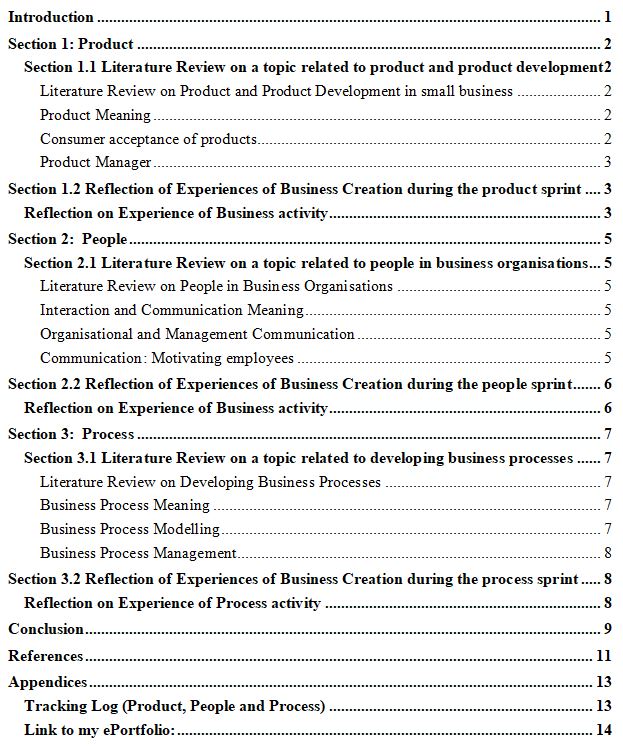
Introduction
In the software Enterprise module, the goal was to create a new business through teamwork within a certain time limit. However, the corona virus (COVID 19) changed everything and changed from group work to individual work after 5 weeks. The task remained the same, but it had to be done individually.
Initially, as a team, we created a LinkMeIn business that provides a social media account review service that will help students and graduates. We create a logo, a schedule for a business, we build a business model and everyone is given their job and position. Then, due to the Corona Virus (COVID 19), it was necessary to build a new business individually and write a new business proposal. That is, devising a new business, this includes planning, developing, managing, setting goals and achieving them, costs, schedules, partners, suppliers, marketing, and of course the company team.
The module requires the creation of a new business, the setting, planning, development, and implementation of goals, with which businesses must respond quickly to changes in the internal and external environment. The module is divided into three main “Sprints”, Product, People, and Process.
The first section is about the product and product development, providing a literature review of product definition, consumer technological acceptance and use, and the role of the product manager. Besides, Reflection, which reflects my business experience in the product section.
The second is a literature review of the People section on the topic of people working in a business organization, how people work together to create, develop, sustain, or grow a business organization. Within this, it provides an overview of Interaction and Communication Meaning, Organizational and Management Communication, Communication: Motivating Employees. Related to this, I had to reflect on the experience of the People section in my own business.
The last section is about business process development. The Process section provides a literature review on three topics, Business Process Meaning, Business Process Modeling, and Business Process Management. Of course, this also reflects my business experience in my literature research, which I did and learned at the end of the Process section.
The module required evidence to support the tasks performed, which required the management of the ePortfolio created on Canvas. The ePortfolio includes:
- Team, which includes activities and meetings within the team.
- Introduction, which includes the introduction of the final submission document.
- Section1: Product, which includes the Literature review, reflection, and peer review of the draft of the first section.
- Section2: People, which includes the Literature review, reflection, and peer review of the draft of the second section.
- Section3: Process, which includes the Literature review, reflection, and peer review of the draft of the third section.
- Conclusion, which contains a summary of the final submission document.
- Tracking Log, which contains the Tracking Log for the Product, People, Process parts.
- Business Advisor Feedback, which was only available for the Product section because, due to (COVID-19), further work had to be done individually and the Business Advisor Feedback documentation was not required for the other sections.
- Tutor Draft Review Feedback, which includes Tutor feedback for the three sections.
- Individual work, which includes the activities carried out individually and which also includes the Business Proposal.
- The final Assessment contains the final submission document of the module.
Number of words: 553
Section 1: Product
Section 1.1 Literature Review on a topic related to product and product development
Literature Review on Product and Product Development in small business
In the Software Enterprise module, a small group (6 people) had to be set up in a small joint venture. The initial capital is set at £5 per person, a total of £30. The main activity of the company should be developed during the project and make maximum profit with it.
Product Meaning
Definition of "product": „A product is the item offered for sale” The Economic Times. (2020). Any product can be considered and is a service, object, intellectual product, or physical, virtual, or computer form. Everything is sold at a price and cost. „Description: A product needs to be relevant: the users must have an immediate use for it. A product needs to be functionally able to do what it is supposed to, and do it with a good quality.” The Economic Times. (2020).
The choice of product name should be chosen in a way that is easily memorized by potential customers, thus making the product a brand. Products should be advertised to inform people about what they can be used for and what benefits the customer can get from it. Also, the product needs to be continuously developed to meet the trends and needs of the customer segment for the product to be marketable. The Economic Times. (2020).
Consumer acceptance of products
This paper provides an overview of basic theories and models for information technology acceptance research. Focusing on consumers, including Unified Theory of Acceptance and Use of Technology 2 (UTAUT2) and Lazy User Theory (LUT).
The purpose of the UTAUT model is to explain to the user the intentions to use the product or service and its behaviour in use. The UTAUT model has four basic structures, the first three being Performance Expectancy, Effort Expectancy, Social Influence, their determinants being Behavioural Intention. The fourth is Facilitating Conditions, which is a determinant of Use Behaviour. These four structures, "Gender, age, experience, and voluntariness of use, are posited to moderate the impact of the four key constructs on usage intention and behaviour." (Unified theory of acceptance and use of technology, 2020)
The lazy User Model, this model keeps in mind the attributes and necessities of the user in both the solution selection process and the attempt that is anticipated from the user while they are selecting an explanation for a given problem from a large variety of other explanations.
Overall, it was observed that the UTAUT2 model had some shortages when it came to its focus on a single solution or technology that can be noticed, as this is the only obtainable explanation to the consumer. Frank, D. domagoj. frank@unin. h., Milković, M. marin. milkovic@unin. h. and Boljunčić, V. valter. boljuncic@unipu. h. (2018).
Product Manager
The final Article “explores the role of the product manager in creating digital experience that audiences love”. Newman, N. (2017). Product managers are at the very front of the revolution that brings together the businesses and the audience; they articulate strategies, define requirements and get involved in on-going deliveries. The very recent and not so recent developments in technology, especially in e-commerce have created a wide variety of new platforms and products to impress and charm consumers. Overall, product managers are hard to find, they are a very important part, a key part, to the success or failure most often without a formal status or power. Newman, N. (2017).
In conclusion, the above articles and studies show that when creating product elements need to be considered even before the creation like; innovation, environmental protection and ethics need to be kept in mind. It also revealed the best model and theories when it came to acceptance research and important features for consumers. Finally, it showcased how challenging it is to hire the right people for the right roles that are needed within the business, how difficult it can be to find good product managers and other employees.
Number of words: 509
Section 1.2 Reflection of Experiences of Business Creation during the product sprint
Reflection on Experience of Business activity
This module aims to create a business with a minimum start-up capital in a short period with a profit. The module uses the Agile method for the business approach. The first stage in “Product Spirit” is the identification of the business product or service that the business wants to achieve and the role of product and product development in small businesses.
The “Product” phase is a very important part of starting a new business, as a marketable product or service needs to be devised and implemented that needs to be competitive against competition. At the first meeting with my teammates, we discussed the potential options for our module product/service. We create an online service that helps students and graduates create professional and well-presented social media profiles to increase their employability. Besides, we also offer options such as retouching pictures and assessing Curriculum Vitae (CVs).
I have no personal experience with starting a business or internet service. However, I have some experience in business management. My business management experience includes purchasing, receiving, opening, closing, shop design, customer service. I believe I can use my experience as a manager to start a business.
After that, we discussed the canvas of the business model so everyone can get their job done. I have been responsible for value propositions and customer relations.
After the identification of the service and the distribution of tasks, the approach of the user clientele and the search for its needs to follow. This is an important consideration for a product or service because a business needs to be aware of the customer segment and its needs. Also important is product management, which creates a product or service that will captivate and impress our consumers.
Since the company started with five people and has since added a new member, I do not yet know what changes this will bring to the canvas of the business model in the distribution of responsibilities and work.
The lectures were on Business Model (BM), Business Model Canvas, Theory of Effectiveness and the New Enterprise Legal Structures - Overview.
Group Activities Exploring Characteristics of Enterprising People, Crafting an 'Elevator' Pitch for Everyone Starting Up a New Enterprise There are all sorts of situations in which to explain your new business idea, Technology Trends That Will Change Our World.
For me, I gained a lot of useful information through lectures and group activities to start a new business. By obtaining this information, I learned that it is important for a business, its clientele, and it needs to be tracked because without it a business can become very confusing and unmanageable. The teamwork experiences have had a big impact on me as my group can be served by different generations in it, so our mindsets are also different. However, they can be very useful for the project, as we can approach the implementation of the business from different ways of thinking.
In addition, with the help of my teammates, I got to know myself better because I wasn’t aware that I could get people together well. I would illustrate this with an example.
At one of the performances, in the middle of the activity, the new team member arrived, sat down among us and watched what was happening. Since he was coming then and he didn’t know what it was about, 3 minutes after his arrival no one had informed him of the developments, I took the courage and started communicating and informing him about the positions of the business, thus involving the new team member in the team as I felt that the newcomer might feel excluded.
My teammates have highlighted that I pay enough attention to all my teammates, have good skills to hold the team together and find a common voice with different ages.
Number of words: 638
Section 2: People
Section 2.1 Literature Review on a topic related to people in business organisations
Literature Review on People in Business Organisations
Interaction and Communication Meaning
People interaction and communication are an important part of setting up and running a business.
Communication is an interaction that takes place between several people to share information. In communication, which is capable of always exchanging, sharing and transmitting the information.
Interaction is when someone acts in a way that influences the other person. For example, if someone smiles at you and you return that, it becomes an interaction. When we interact with someone, we do not always exchange information. “Communication and Interaction are two terms that often go together although there is a difference between these two words.” Admin, (2015).
Organisational and Management Communication
For any type of organization, establishing a job requires a plan management strategy that manages the organization. The workforce performs the tasks assigned to achieve the goals. A manager, who is responsible for executing management, needs communication skills to coordinate, execute, form partnerships and inform the people for the best results. Leaders need to consider important aspects such as concise and precise wording, fast message delivery, common language, and flexibility.
”Communication is an asset available to each organization and must be harnessed for the purpose of attaining the aims set out which are of major importance” Slatten, T., Göran, S., & Sander S. (2011). Communication performs different kinds of functions, Social Interaction: People interact with each other, Business and Trade: Business Transactions, Sales, Prices, Delivery, Exchange of Ideas and Spread of Knowledge: Sharing our Knowledge, Social-Political Development: Working with People social and societal political development, Social-Cultural Integration: exchange of cultural values (music). A.O., s. and A.A, a., (2016).
Communication can be divided into two directions, external and internal. Internal information transfer is based on the performance of staff and activities. „Communication makes possible the interaction between members of the working team. A manager should be the first to establish bridges between the members of the organization, through a careful and effective communication.” Bucăţa, George & Rizescu, Marius. (2017). On the other hand, the transmission of external information is the point of contact for business purposes, such as suppliers, distributors, consumers. The communication process is an indispensable management tool within a given management system. Communication as a management tool facilitates people-to-people contacts, which is beneficial for the development of the organization.
Communication: Motivating employees
Another important part of communication is motivating employees. „The motivated and dedicated employees are the dream of any employer because they are the ones that increase the productivity of the company, maintain a positive working environment and based on collaboration and teamwork, are loyal to the company.” Frandsen, F., Johansen, W. & Pang, A. (2013). However, motivating employees is not an easy task. Human factors have a major influence on the atmosphere in the organization and thus on productivity. The individual behaviour of employees can influence work-life relationships, privacy and quality of relationships with employees. Communication programs play a very important role in motivating employees. Organizations can motivate their employees in a number of ways, such as rewards, “financial packages, career plans, training programs, and professional development” in order to make profits for the organization. „As leader or manager in an organization, the person in charge needs to make him/her understood, and to send the information to arrive at the receiver in time, in order to be processed; if it is lost then the fault will occur at the organizational level.” Bucăţa, George & Rizescu, Marius. (2017).
In summary, communication is an important part of organizations. Organizations are based on communication, whether external or internal. Inadequate communication endangers productivity, which can lead to the disintegration of the organization.
Number of words: 552
Section 2.2 Reflection of Experiences of Business Creation during the people sprint
Reflection on Experience of Business activity
The first Literature Review and Self-Reflection, based on feedback, revealed a number of errors. My mistakes included different sections I did not distinguish between titles, some of the content could be moved to the introductory page, adding a word count and having to think more deeply about performance and self-study. Give me feedback on what I need to improve and learn from these mistakes so that I won't make those mistakes the next time I submit.
The second phase in People Spirit discusses social processes, such as demographics, class stratification and the environment of social relationships, and how they affect the lives of entrepreneurs. In addition, enterprises structure, types of management and organizing people into structures.
My team members usually attended every meeting and everyone took part in the work equally. The purpose of this section was Complete Marketing and Branding (Logo, Advertising), Contact Student Union and Discuss Finance and Cost Structure and Release Service. In group activity, we discussed and analyzed corporate ideas, insisting on the original idea, what additional services we offer, and the ways forward. Building the corporate structure I personally got the organization/ management of the Activity, which was surprising to me that this task was assigned to me. Because I am not a man of words and many times it is difficult for me to express myself. Since English is not my native language for this reason, my lack of English vocabulary poses challenges for me. I was of the opinion that the ability to communicate within an organization and to organize and manage activities is essential, and that is not a fact that I can assert. However, before each meeting, I reviewed the tasks ahead and prepared to make my work and that of my team easier, which resulted in me being eligible for such a position. The lesson I learned from this is that there are many aspects that can be considered to achieve success within an organization.
In addition, we have created the Model Structure for the team, SWOT Analysis, which examines Strengths, Weaknesses, Opportunities and Threats for the business. We will discuss current networking opportunities for you to choose from in the future, including a mutual advertising partnership with other micro businesses in the module. We also finalized the business logo.
The module was greatly influenced by the fact that we are going through many changes around the world due to corona virus. In this section of the module I will need to continue individually in my group. Now the micro-business had to be stopped and the aim is to draft a new business proposal. My goal is to develop a draft business proposal.
At this stage, the lectures learned have shown how people in an enterprise can influence its operation and that the role of individuals is very complex. From this I concluded that communicating with and motivating people is an important part of creating and sustaining a successful business. Hopefully, to continue the module individually, these experiences will help and inspire me to set up a successful business within this module.
Number of words: 512
Section 3: Process
Section 3.1 Literature Review on a topic related to developing business processes
Literature Review on Developing Business Processes
Business Process Meaning
A business process is an interconnected process by which people or equipment create a product or service for a customer. This includes receiving orders, shipping, setting a budget, and more.
Participants in business processes perform specific tasks that specialize in achieving a given goal. In order to automate a process, these steps are repeated several times in a unified and optimized way, such as design, manufacturing, sales, business process management. (Business Process Definition - What is Business Process? | Appian, 2020) Business process can be split into three main Categories: Management processes, Operational processes and Supporting processes.
Business Process Modelling
Modelling of business processes, depicting the processes of the enterprise, business process management and system design that can be analyzed, developed and automated, So it is a quality management tool that is part of modern business process management (BPM).
The Business Process has been used as an organizational tool to determine what the baseline is and to determine the future with any customized development.
Business process modelling visually depicts all related activities, and for this there are a number of software that can be used as an effective tool in business process modelling. Using these tools to make an event or resource in the process of a product or service more efficient, shows your weaknesses or strengths in doing so. (Management and Modelling, 2020)
The category of information that is collected during modelling is the inputs of anything that is transformed or used. This includes physical transformation, local movement, or alteration of information, Outputs: the result of transformation with inputs, Enablers: Helpers use the conversion of inputs into outputs. For example, equipment, human resources, etc., Guides are anything that helps you define a process when, how, and why it happens, such as; information, rules, knowledge, revenue, performance reports. (Importance of Business Process Modelling for Your Business - Creately Blog, 2017)
Business Process Management
In today's business world, you create and manage processes that are relevant to a particular business and have specific goals.
"Business Process Management (BPM) is the practice of designing, executing, monitoring and optimizing business processes." (Russo, 2019)
Business process management is thus discovering and implementing ways to run business processes smoothly.
The benefits of management include cost efficiency, increased productivity, better employee and customer satisfaction, and a stronger corporate strategy.
Business process management operates in a continuous cycle: Design involves planning existing and future processes that provide activities, people, and decisions to achieve effective results, Modelling serves to map the current process and plan the future state with improvements, Execution is about validating discovered and modelled business processes It is enabled with a combination of manual or automatic tasks, Monitoring stage, processes that are implemented to collect and evaluate data for improvement in order to be aware of cycle time, error rate, and productivity. Optimization of the observation phase based on making the process more efficient and Reengineering if the process is too complicated or inefficient, redesign is recommended. (Mayo, 2020)
In summary, the business process is important for any organization and must adapt to environmental change. Business processes are important in reducing human error by allocating tasks to people who specialize in them. Improves efficiency: Improves department productivity by finding the most appropriate steps for your business. It uses a variety of methods to discover, model, analyze, measure, develop, and optimize business processes, and can be effectively managed with this knowledge. Continuous analysis of management is important as the errors identified can be eliminated by redesign.
Number of words: 501
Section 3.2 Reflection of Experiences of Business Creation during the process sprint
Reflection on Experience of Process activity
Based on the second literature review and self-reflection, the feedback showed an improvement trend compared to the previous one, although I still have room for improvement to avoid mistakes. Among the suggestions was that the literature review should be reviewed to make the places a little clearer. At reflection, it needs to be corrected as proofreading and my work needs to be reviewed. The feedback helps a lot in correcting any mistakes and gives me an opportunity on how I can make my work even better next time, which I can improve on.
The third phase of the Process Spirit is a group of Business Processes and Marketing Strategies, Activities, and Tasks that, once completed, achieve an organizational goal. Design and implementation of processes such as manufacturing, administrative, service process or project plan. In addition, an illustration of the business system, which includes a description of the business process, motivation, individuality, etc. discusses.
For me, the third section caused a difficulty in literature research, as this section has a very large topic and we also get a lot of hits within a topic if we search for it on Google. Perhaps this section was the most demanding of the time, though hopefully I successfully took the hurdles.
With the advent of the crown virus, individual work has also brought a new challenge. It was a headache and it was hard to start writing a Business Proposal the biggest difficulty for me was coming up with a new good idea. The benefits of teamwork, in terms of meeting different ideas, approaching from a different perspective or lacking reference to each other, individual work brought me poor ideas and unmotivated. On the other hand, it was an incentive for me to improve myself, as I could only rely on myself, although it required more work and research, which made me more motivated and thus able to work alone.
Online education has proven to be very useful as it has brought regularity into our daily lives and thus provided an incentive for weekly activities to be carried out. A number of activities have been carried out, including Self-Assessment, ‘Zero Budget’ Marketing Strategy; create a budget for my business, weekly Reflection and Business Proposal.
At this stage, I learned in the online lectures that the business process is very complex and complicated, but it is a very important part of any business. I got an answer as to why these processes are necessary for a business to achieve its goal and the path to it is described step by step. Therefore, there is a need for a logical structure of design, manufacturing, sales that are necessary for an organization to achieve its goal. The Software Enterprise module has developed many of my skills, such as planning, teamwork, verbal skills, problem-solving skills, motivation, and of course, important steps to creating a new business that need to be considered. From this, I have come to the conclusion that there is a very bumpy road to achieving your goal. I have gained a lot of experience and this module has given me confidence and these experiences will hopefully help me achieve my goal.
Number of words: 529
Conclusion
The Software Enterprise module aims to create a new business, an important part of which is to be aware of the processes, including the creation, development, sustainability and growth of a new business, these points required literature research to acquire knowledge.
Literary research has highlighted the complexity of creating a new business and how many factors depend on the creation of a successful business and its sustainability. The literature research helped to understand in more detail the role of the three stages of the module Product, People and Process and its importance, using these three stages can make a business a success.
Literary research has helped the business by providing information, providing guidance to our business on how and how to improve it. During the module, this was utilized by working together as a team, paying attention, listening to each other and making decisions together, this includes creating a logo, developing workflows, and defining tasks and positions. In the case of individual work, however, it helped to see what opportunities there are for free advertising, as it was only during the research that I noticed that there were many opportunities that could be put to good use for a business. The importance of communication and motivating employees is essential, as inadequate communication and providing employees with inadequate working conditions can jeopardize the business and together can mean the end of the business. Lastly, I would like to highlight the management of business processes, as it is important that the processes work flawlessly. You need to be aware of how to discover and implement it, and if necessary, redesign for efficiency. For example, it has been utilized to reduce human error by allocating tasks to specialized employees.
During the module I was given different roles during group work and individual work, first in the “Product” section in the structure of the Business Model Canvas value propositions, i.e. improved profile, CV, pictures and employability, and customer relationship responsibility, i.e. professional short term, I got digital contact. I was involved in the “Product” part, also in the phase of each work, in the design of the logo and company name too. My teammates said that I always held the team together and paid attention to all my teammates, and as a result, I was assigned these tasks together and paying attention to each other, then can result in an effective, well-cohesive teamwork with which a business can achieve success.
My next role in the “People” section was to assign our business hierarchy and a special role to each person, and my teammates assigned the role of Manager to me. My teammates assigned me this task because, I have been prepared in advance for each meeting, and I made plans and solutions for the tasks of the day. As for business activities, it has resulted in faster and more efficient work due to preparedness. The role of Manager was very new to me, although due to COVID-19, I did not have the opportunity to try myself in this position as the module had to be continued individually.
Lastly, from the half of the “People” stage to the end of the “Process” stage, a whole new role could be faced. In the case of individual work, the role of the owner was I filled, with which, individually, I experienced everything during the establishment of the business. Together, the lesson materials, activities, and teamwork all contributed to the creation, development, sustainability, and growth of a new business individually. This affected Business by developing my personal skills, including risk-taking, decision-making, problem-solving, communication, and managed a business.
Sustainability of the business can be maintained at this level at all times, but this requires a great deal of attention and flexibility. It could potentially be influenced by an external factor that could make a big difference, such as the Corona Virus (Covid-19), as a business cannot prepare and defend against such an external factor.
Number of words: 655
References
Admin, (2015). Difference Between Communication And Interaction | Compare The Difference Between Similar Terms. [online] Compare the Difference Between Similar Terms. Available at: <https://www.differencebetween.com/difference-between-communication-and-vs-interaction/> [Accessed 22 March 2020].
Appian. 2020. Business Process Definition - What Is Business Process? | Appian. [online] Available at: <https://www.appian.com/bpm/definition-of-a-business-process/> [Accessed 27 May 2020].
A.O., s. and A.A, a., (2016). The Impact Of Effective Communication On Organizational Performance. The International Journal of Social Sciences and Humanities Invention
Bucăţa, George & Rizescu, Marius. (2017). The Role of Communication in Enhancing Work Effectiveness of an Organization. Land Forces Academy Review. 22. 10.1515/raft-2017-0008.
Creately Blog. 2017. Importance Of Business Process Modeling For Your Business - Creately Blog. [online] Available at: <https://creately.com/blog/diagrams/importance-of-business-process-modeling/> [Accessed 24 April 2020].
En.wikipedia.org. 2020. Unified Theory Of Acceptance And Use Of Technology. [online] Available at: <https://en.wikipedia.org/wiki/Unified_theory_of_acceptance_and_use_of_technology> [Accessed 27 May 2020].
Frandsen, F., Johansen, W. & Pang, A. (2013). From management consulting to
strategic communication: studying the roles and functions of communication consulting.
International Journal of Strategic Communication, 7(2), 81-83.
Frank, D. domagoj. frank@unin. h., Milković, M. marin. milkovic@unin. h. and Boljunčić, V. valter. boljuncic@unipu. h. (2018) ‘Identifying Requirements for Consumer-Focused Information Technology Acceptance Research’, Acta Graphica, 29(2), pp. 31–40. doi: 10.25027/agj2017.28.v29i2.157.
Management, P. and Modelling, B., 2020. Business Process Modelling – Businessballs.Com. [online] Businessballs.com. Available at: <https://www.businessballs.com/performance-management/business-process-modelling/> [Accessed 24 April 2020].
Mayo, A., 2020. The Business Process Management Life Cycle - Processonline. [online] Transformación Empresarial. Available at: <https://www.pol.com.co/the-bpm-life-cycle/> [Accessed 24 April 2020].
Newman, N. (2017). The rise and rise of product management - BBC Academy. [online] BBC Academy. Available at: https://www.bbc.co.uk/academy/en/articles/art20130722141956221 [Accessed 16 Feb. 2020].
Russo, A., 2019. What Is Business Process Management?. [online] Outsystems.com. Available at: <https://www.outsystems.com/blog/posts/business-process-management/> [Accessed 24 April 2020].
Slatten, T., Göran, S., & Sander S. (2011). Service Quality and Turnover Intentions as
Percieved by Employees. Personnel Review, 40(2), 205-221.
The Economic Times. (2020). What is Product? Definition of Product, Product Meaning - The Economic Times. [online] Available at: https://economictimes.indiatimes.com/definition/product [Accessed 15 Feb. 2020].
Appendices
Tracking Log (Product, People and Process)


